Friday, November 9, 2012
Great News in Lawsuit Against Oath Breaking Cop

It has been a truly great week. The police officer I am suing requested the court issue a summary judgement (ie dismissing my case), in my lawsuit against him after he unlawfully pulled me over (in violation of the Fourth Amendment), and then unlawfully arrested me because I pointed out he had broken the law (in violation of the First Amendment). He cited the typical "qualified immunity" argument. Instead, the court just denied his motion for summary judgment on both of my amendment claims. This was the big hurdle in this civil rights lawsuit, we have successfully jumped it, and that means we are going to trial.
I feel very good about this lawsuit. Very good! I will keep my comments here limited, as the lawsuit is ongoing. But it has been a great week for defending our Constitution.
Happy Veterans Day weekend to all.

Thursday, November 8, 2012
There is Justice in the Air Force - A Victory for our Constitution

I spent yesterday in a complete daze after I read an Air Force document that absolutely filled me with joy and pride, and restored a good measure of my trust in our service. After so many years of watching Air Force accountability processes shamefully fail me in various battles to make our service and our country stronger, I read something yesterday that stunned me. An agency, high up in the Air Force ether, made a correct decision and issued a report that showed a great deal of respect for our Constitution and our rule of law.
I should back up. For just over a year now I have been fighting an enormous battle that I haven't previously discussed, with the exception of one vague post about a poem my wife shared with me. I'm not going to get into anything more specific here, and it's quite possible I may never do so publicly, but suffice it to say I stood up for the Constitution in an extremely meaningful way, and as a result I was facing separation from the Air Force with more than fifteen years of service and possibly even graver consequences. For doing the right thing. For being principled and honoring my oath to support and defend our Constitution, and for forsaking my own convenience and personal gain in favor of our nation. There is one thing, however, that must be shared, and that is this - there can be justice in our service. It can do the right thing, and that means airmen can do the right thing in terrifying circumstances, with no apparent allies, standing alone - and yet be vindicated in the end. There can be justice in the Air Force.
And it's a beautiful sight to see.
In my latest battle, not only did a high level organization find in my favor, but they made it clear with their words that they would not punish me for honoring my oath. Beyond that, they essentially vindicated my years of service that led to so much "derogatory" information in my file. During this process- all of the numerous reprimands I have collected over my career were used against me as evidence, to include the most recent addition. My encounters with unlawful law enforcement were offered up as evidence, and even this blog was used as evidence against me, though no specific comments or posts were cited.
I have often said that I am more proud of my reprimands than I am of my medals, because they paint the most accurate picture of my courage and service to this nation. There is a word that seems to be a common thread throughout all of my reprimands. Constitution. Fortunately, this Air Force agency saw that same picture. In their finding, they mentioned each of my reprimands in detail and then summed them up, stating:
On the surface, it would appear that receipt of multiple letters of counseling and reprimands would indicate questionable judgment and an unwillingness to comply with rules and regulations. However, when each incident is reviewed on its own merit, it would appear Subject is fully aware of the U.S. Constitution and has openly challenged what he perceives to be a violation of either his own rights or those of other American citizens.They mentioned interviews with people during an investigation and, minus the review of one who brought the action against me, all were favorable. One of those interviewed "indicated Subject has a good work ethic; holds very strong views and opinions which he readily expresses; particularly strong views about the Constitution and how it should be interpreted..." The agency also mentioned my encounters with law enforcement, and that charges were dismissed in court, and it even noted that I had filed a civil suit against a police officer who violated the Constitution. The agency discussed the substance of my most recent battle and concluded that, "It is the opinion of this [redacted] that Subject's objections to what he believes are violations of the U.S. Constitution, as reflected in the documents associated with [this action], do not represent a...concern." With that conclusion they halted and reversed a significant punitive action that was being taken against me.
We shouldn't fight righteous battles for our nation only if we think victory is assured. We're in the business of courage and service, so shirking our responsibility to our nation for our own personal gain or for a supervisor's approval is not an option. That doesn't mean it will be easy, and for those few who are truly tested, it can be absolutely terrifying. But what this latest act of service has taught me is this - if you do the right thing, you may just find that there are those much higher than yourself who will also do the right thing. Imagine if our service was populated by such people. Imagine how much stronger our service and our country would be. It might just start with you. Do the right thing by God and taxpayer, as you swore an oath to do, and let the chips fall where they may. Don't count on it, but it might just work out.
Something to consider this Veterans Day weekend.
Tuesday, October 30, 2012
Update on Border Patrol Lawsuit & Discussion of the Law
Over the last several years, I have spent a considerable amount of my time and resources defending the Constitution from government actors who have violated it. One of those battles involves a string of violations at a Border Patrol checkpoint in Uvalde, Texas. While stationed nearby, I traveled through that checkpoint nearly every weekend to go from one American town to another American town, without crossing any border. The first of those incidents involved Border Patrol agents punishing me for not telling them my intended travel destination, by fabricating that their drug dog had hit on my vehicle, and then demanding I exit it so that they could search my two-door car. They tore through my vehicle and threw my property onto the pavement, including my laptop computer. Of course after their ten or so minute search, with the drug dog inside my car, they found no drugs. After I collected my belongings off the pavement and put them back into my vehicle, I went on my way. That was Veterans Day weekend. I filed a complaint with the Border Patrol headquarters.
But the harassment didn't end there. Finally, after several more incidents and after an incident with a dishonest police officer, I installed cameras in my vehicle to document any further unlawful activity by law enforcement officers. Much as a convenience store owner who suffers a string of robberies might install a surveillance system, the cameras were put in place to provide some measure of accountability in a location that was was filled with unlawful activity. It paid off greatly.
It allowed me to capture a thirty-four minute detention and a violation of the Fourth Amendment at that same checkpoint. Many don't understand the law surrounding these checkpoints, so I'll provide what I have learned over the years. It should be noted that we are talking about interior checkpoints that can be located up to 100 miles from any border, on highways where there is no border crossing. This is an important distinction, as the law governing these checkpoints differs greatly from checkpoints that are actually on an international border. So what is the law that applies? Let's start from the beginning.
The Fourth Amendment to the United States Constitution guarantees the people the right to be free from "unreasonable searches and seizures." The United States Supreme Court stated, "It is agreed that checkpoint stops are 'seizures' within the meaning of the Fourth Amendment (U.S. v. Martinez-Fuerte)." The reason the High Court maintained that these checkpoints are seizures, is because all traffic is required to stop at these checkpoints. As such, for the time a vehicle is stopped at the checkpoint, both it and its passengers have been "seized" by the government and cannot depart the checkpoint without permission from the government. The question then becomes, is that seizure reasonable or not?
The Supreme Court ruled that, "A search or seizure is ordinarily unreasonable in the absence of individualized suspicion of wrongdoing (Indianapolis v. Edmond).” In other words, if a government agent has suspicion that a person has violated a law, they can seize that person in order to begin an investigation. This is the standard used, for example, when a police officer pulls over somebody speeding. They develop the suspicion through a radar gun or other mechanism, and can then make the individual stop and issue a citation, which then has to be proved in court. If a police officer pulls somebody over without suspicion that they have committed a crime then, according to the courts, they have conducted an unreasonable seizure and therefore violated the Fourth Amendment.
Border Patrol checkpoints not on the border are often referred to as suspicionless checkpoints. That is because all people have to stop and are seized, despite the lack of suspicion that any crime or violation has been committed. So while the Supreme Court has historically ruled such seizures a violation of the Fourth Amendment, the High Court did make an exception for these checkpoints. In doing so, however, they laid down specific parameters that must be followed for the seizure at these checkpoints to remain reasonable. Namely, the Supreme Court required that these checkpoint seizures be limited to, "brief questioning" to inquire into immigration status (U.S. v. Martinez-Fuerte).
Further, the courts have ruled that these checkpoints cannot be "catch all" checkpoints, that operate looking for any and all types of violations, but rather that they are limited to immigration status. Anybody who has much experience with these checkpoints knows they routinely stray outside these lines and are effectively in place to also look for drugs. Drug dogs are not gifted in the art of smelling citizenship (they're also prone to false alerts especially when handled by a dishonest dog handler). But legally, these checkpoints are limited to briefly inquiring into immigration status, and they are not allowed to investigate into anything else unless they have reasonable suspicion for a non-immigration violation. The reason for this is because these suspicionless seizures are an intrusion into the lives of law abiding citizens who are forced to stop there, and the courts have reasoned that as long as they are limited to brief inquiry into immigration status, then the intrusion is minimal and therefore justified. As an aside, Supreme Court justices Thurgood Marshall and William Brennan vehemently disagreed with this view that such an intrusion would be minimal and therefore did not think them reasonable under the Fourth Amendment. In fact, they argued that the ruling allowing these checkpoints to seize motorists, no matter how brief, did not justify the intrusion upon citizens suspected of no wrong doing who were simply traveling down the highway. They wrote:
The starting point of this view [the majority opinion] is the unannounced assumption that intrusions are generally permissible; hence, any minimization of intrusions serves Fourth Amendment interests. Under the Fourth Amendment, however, the status quo is nonintrusion, for, as a general matter, it is unreasonable to subject the average citizen or his property to search or seizure. Thus, minimization of intrusion only lessens the aggravation to Fourth Amendment interests; it certainly does not further those interests (U.S. v. Martinez-Fuerte).The majority of Supreme Court justices found otherwise, and made an exception for suspicionless checkpoints, but required the seizure to be brief and limited to inquiring into immigration status. The Supreme Court stated that “[A]ny further detention . . . must be based on consent or probable cause (U.S. v. Martinez-Fuerte).”
So what is brief, and what is further detention? According to the Fifth Circuit Court of Appeals (which has jurisdiction over the checkpoint in Uvalde, Texas), a stop of “a couple of minutes” is “within the permissible duration of an immigration checkpoint stop (United States v. Machuca-Barrera).” That Circuit has also ruled that Border Patrol officers may “ask questions outside the scope of the stop,” ie questions that are not related to immigration status, but they may do so “only so long as such questions do not extend the duration of the stop (United States v. Machuca-Barrera).”
What about an order to exit the vehicle? Do individuals have to exit the vehicle if requested to do so during the brief immigration inquiry? The answer is no. Regardless of whether requested in primary or requested in secondary, an individual has no legal obligation to exit their vehicle. Certainly such action is not required to briefly inquire into immigration status, and further, the Border Patrol has no authority to order a person to exit their vehicle. Why not? Yet again, it's because there is no suspicion of any wrongdoing. The Supreme Court has ruled otherwise in the case of suspicion based stops by law enforcement, such as a traffic stop for suspicion of speeding (Pennsylvania v. Mimms). In that case, the Supreme Court has said law enforcement can order vehicle operators out of their vehicles for "officer safety." The High Court chose, during suspicion based stops, to value the safety of government actors during routine traffic stops over the safety of American citizens. However, agents of the Border Patrol have no such authority at suspicionless checkpoints.
So what questions are individuals required to answer at these Border Patrol stops, if any? The answer is none. Cooperation during suspicionless checkpoints is not required. Individuals have a right to not answer questions, and there is no law that requires them to provide any identification. Further, cooperation with an investigation/inquiry is not required even in stops that are based on suspicion, so they are most certainly not required in a stop where there is no suspicion of wrongdoing. Still further, choosing not to cooperate with government actors who intrude into your life at a suspicionless checkpoint, cannot be used against you as a basis for suspicion. The Supreme Court ruled, "We have consistently held that a refusal to cooperate...does not furnish the minimal level of objective justification needed for a detention or seizure (Florida v. Bostick). The Fifth Circuit that holds jurisdiction over the checkpoint in Uvalde, Texas agrees stating, “[I]t would make a mockery of the reasonable suspicion and probable cause requirements if citizens' insistence that searches and seizures be conducted in conformity with constitutional norms could create the suspicion or cause that renders their consent unnecessary (United States v. Machuca-Barrera).” An individual does not have to cooperate with agents at these checkpoints, and after the "couple of minutes" required to "briefly inquire" into immigration status, agents who have developed no reasonable suspicion for any violation, must release the motorist in order to comply with the Fourth Amendment. Even if the individual chose not to answer questions or cooperate.
The Fifth Circuit has also stated, "Our decisions have held that police violated the Fourth Amendment by extending a stop by even three or five minutes beyond its justified duration (United States v. Machuca-Barrera)." As such, I am extremely confident that my lawsuit will be victorious as I was detained for nearly thirty-four minutes, after agents failed to ask me any questions related to immigration status until more than ten minutes into the detention, and only did so after I had provided my driver's license, military ID card, and even offered my passport (an offer the agent ignored). Beyond that, when the supervisory agent even later finally asked for both of my passports, I quickly provided them to him. Still, he put them in his shirt pocket and detained me for another fifteen minutes while he called my military chain of command to verify that I was actually in the military--questions and actions that had nothing to do with my immigration status, but rather demonstrated a desire to punish me for recording the incident. The agents repeatedly lied, saying that they had asked me my immigration status in primary, and that I had refused to answer the question. The video shows that I answered every single question asked of me, with the one singular exception of providing the identity of my commanding officer, which I was not required to provide and which was information irrelevant to my immigration status. Beyond extending the detention to call my military employer, their intent to harass was further demonstrated several weeks later when they wrote a letter to my military commander and claimed that my conduct was "unbecoming."
The law is clear, and even if I were to have to appeal my case to the Fifth Circuit that ruled in Machuca-Barrera, I am very confident that the Fourth Amendment will be vindicated.
These checkpoints are intrusions into the lives of law abiding American citizens who simply wish to travel unmolested. Agents at these checkpoints require no suspicion of any wrongdoing to force themselves into your lives, but the Supreme Court has made it clear that they must remain limited intrusions. It is important for us, especially for those of us who have taken an oath to support and defend the Constitution, to not blindly acquiesce to unlawful demands agents might make. If we do so, we unwittingly train them to expect all who pass to likewise give up their constitutional rights or be harassed. Even those who answer all relevant questions, as I did, and who provide four forms of identification including two passports, as I did.
If we don't support and defend the Fourth Amendment, what will be next? Government agents able to enter our homes without any suspicion of wrongdoing and without a warrant? Government agents who seize us during a walk to work without any suspicion of any wrongdoing? Let's not allow the further eradication of our rights. Not on our watch.
Sunday, October 21, 2012
Legacy

A couple of weeks ago I was fortunate enough to attend the portrait unveiling for a judicial giant, Judge Douglas H. Ginsburg. The judges from the Court of Appeals for the D.C. Circuit, present and past, dawned their robes and sat on the bench during the event. The seats in the court room were filled with people from the legal community, including several justices of our Supreme Court. Justice Alito and others spoke, honoring the long and faithful service of the judge. After many great words, the portrait was unveiled. Sitting in the marble chamber, a glance to the left or right showed the hanging portraits of all the judges from that chamber throughout its history. A glance gave the impression of history, of something more important than the immediate, of something bigger than self. The judge's portrait became a part of that legacy. An American legacy.
We in the military also have the opportunity to build a legacy. Surely, most of us will not get our portrait hung in a majestic building, but a portrait is merely a symbol. It's a symbol of the faithfulness and dedication of the individual in the rendition, and the real legacy is found in time spent in service to the nation and to that which makes our nation special. Our Constitution. I feel a kinship with the judiciary. Article Six of our Constitution, in the same line, in the same breath, requires both the judicial and executive officer, to swear or affirm to support that document, and the civil liberties enshrined within it. Legacy for public servants, in my view, is determined by how well those public servants discharge their duty. The jury is admittedly still out on Ginsberg, who has a real love of aristocratic trappings and who ruled inexcusably that banning AR-15s was constitutional. Portraits often more accurately portray a love of power over principle.
Regardless, our Constitution is worth defending. I hope that we who serve in the executive branch, and who have sworn to defend that document, will also strive for a career of faithful service. The legacy of our work will be the continued existence of a free and prosperous nation. We have a large role and responsibility in ensuring that this is the case. It is not the judiciary's charge alone to support our nation's highest law. We in the military play an important part, and we must strive to study and understand our Constitution, and to ensure that we comport ourselves appropriately in our action. All of us who have sworn the oath, have a duty to support and defend our nation's highest law wherever threatened, in court or elsewhere.
Those who have served before us, memorialized in portrait or not, have passed the torch on to us. It's up to us to honor their service, and to be a part of the American legacy.
Monday, August 13, 2012
A Fate Worse Than Death
I recently saw this video from Lt Col Mike Drowley, an A-10 pilot and Weapons Officer. It's excellent and it sums up the standard of every aviator I know, when it comes to protecting our guys on the ground. I do honestly mean standard. I am proud to say that I have never in my career, met an aviator that I thought would give anything less (or who wouldn't at least die trying to give the same), to protect our brothers on the ground.
There are fates worse than death. When we also realize, and act on, the idea that there are fates worse than career death, we will then be able to build an amazing Air Force.
Lt Col Drowley said that he "swore" to never let anything happen to those military members on the ground. I never swore such an oath with my mouth, but I certainly did with my heart. But I did, and Lt Col Drowley also did, swear an actual oath with our mouths. That was an oath to support and defend the Constitution of the United States against all enemies foreign and domestic.
It's also a fate worse than death to watch our citizens (even the long-haired hippie Occupy protestor, or the the clean cut Tea Party protestor, and even the nutty Fred Phelps church member, or perhaps some American citizen Muslim who presents no imminent threat but is on a kill list--or at least as reported by media sources) lose their Constitutional rights to free speech and due process on our watch.
Nobody ever said defending America would be easy. But for those who swore to do so, there is a fate worse than death. And there is even a fate worse than death on foreign soil defending American soldiers, a fate where you forgot who you were really defending, and forgot your nation and why you were fighting in the first place.
Wednesday, August 8, 2012
The Welsh Have a Saying - The Proof Is in Da Pudding
So many times I hear, "He seemed to really care, he really listened to me. It was refreshing."
I think, THE MIRROR.
Never been to any fancy schools, but I have learned, after a decade of trying to find a companion I could respect, that some women are gifted at using the mirror. They are masters of appearance. If, however, you are interested in more than how they look, and if you sincerely attempt to get to know them and their value system, they will do their best to reflect back to you what they think you want to see. Like a mirror to whatever audience, they are interested in shaping an appearance to please. They are gifted at "listening" but they really don't share your values despite their sincere looking head nods and facial expressions. You feel like they listen, you feel like they get you. But they are creating a deception. Of course it's not just the fairer sex who do this.
It's also the primary skill of the politician, to include many commanders. To make you feel like they know where you're coming from, which they probably do, and more importantly to make you feel like they care, which they probably don't. But as long as you feel like they understand you, then when they are at the helm, you'll make excuses for their failures. They weren't ready, they weren't competent enough, they were too nice, it was the situation they couldn't control, it was other people. It wasn't them though, you know them, they tried, they care. You don't want to admit to yourself that their actions, which are nothing like what they said, are not the result of a failure, but rather the result of a well crafted deception. You don't want to acknowledge that when you tried to get to know them and their value system, they held up a mirror so you could see yourself, all the while never actually caring about what you care about. You don't want to admit that you know nothing about them.
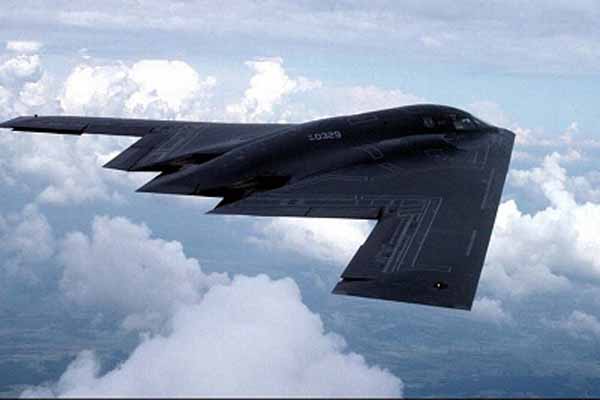
I remember some physically attractive women I dated a long time ago before I knew their merits, before thankfully finding a superior person and marrying her as fast as I could (and in ten years of marriage have never met a woman who ever came close). These other women looked good on the surface, they were pretty, they could talk a good game and they said the right things in social situations. They were fine arm candy. But my attempts to ask thoughtful questions to understand them, were met with the mirror. Like stealth, they seemed to absorb or deflect my signals seeking to map out who they were. But they sure looked good on the surface. I was wise enough to not fall for the illusion, and I could ferret out the dishonesty. Young men, approach your dating life like it's a great investigation. Know yourself, and then get to really know the other. Woe to him who can't see beyond nice speeches and a shiny reflection of himself...
So that brings me to this. Welcome. I hope you're not like so many before you, above you, and below you. We need a real leader. If you're it, I'll be your biggest fan.
Thursday, July 19, 2012
The Military Hippie Divide

Awhile back I blogged about how military public servants and "activists" should be more similar. One takes an oath to support and defend the Constitution and to demonstrate courage, while the other exercises those Constitutional rights, and uses the most basic machinery of a democracy to strengthen our liberty here at home, and often does so with great courage, in the sad face of batons and pepper spray and worse.
There should be an affinity between the two groups. Instead, there is distrust and caricature. One group is part of "the system" and the other is a band of unemployed America-hating "dirty long-haired hippies." Some military folks even celebrate citizens being beaten and pepper sprayed while exercising their First Amendment rights, and even joke about employing munitions on them. I think the image of the hippie spitting on the returning Vietnam veteran has done great harm, but I think the problem is much more than that. I think the "hippies" are right, those who they pay to protect their freedom, and who swore before God to do so, are in large part failing. We are seeing many failures across the spectrum of our nation, but these failures are much more important in systems that wage the tools of violence. I think these voices of concern are democracy's feedback session to those of us who raised our hands and took the oath.
Prior to this past weekend, I had never been to an "activist" meeting, or a protest or anything of that nature. I keep putting the word "activist" in quotes, because I don't really like the term, as it sets some Americans apart for simply being good Americans by exercising their rights and attempting to guide the government they pay for. Regardless of the semantics, I traveled to Austin, Texas to be a part of the Peaceful Streets Project's Police Accountability Summit and to share some technologies that Americans can use to protect themselves against those number of police officers who lie, and who ignore their oaths to the Constitution by violating the rights of the citizens who pay them.
It was an interesting experience. The event was impressive and more than two hundred people showed up. There were several great speakers, and the folks who put the event on were truly amazing. I witnessed some great organizational and people skills, and some truly great communication. The crowd was very diverse. There were libertarians, Occupy folks, conservatives, liberals, anarchists, whites, blacks, Asians, Latinos, the well to do, the standard middle class, the poor and the homeless. I met many great Americans, and I met just a couple of individuals who I would classify as conspiracy theorist and perhaps a bit "out there." I was very pleased, and relieved, that violence was not even hinted at, by any in their discussion of the problems and possible solutions. I actually felt like I had a real connection that traced back to the days of Martin Luther King and the many nameless who moved the ball forward for liberty in this nation. That was a nice feeling.
I had some of my media-reinforced stereotypes shattered. Case in point, when I met two folks who looked and sounded like "rednecks" who might be found in a duck blind cursing activists. I found out that the two gentleman were representatives from Occupy Austin, and I found myself wondering what real difference there might be between the Tea Party and the Occupy movement. These were just impressions.
What was more interesting to me, was that there were some who were clearly suspicious of your humble blogger, because of my chosen occupation. That was interesting. I don't typically experience that in my day to day experience. I don't blame them, of course, when they are a group that exercises their rights and are vocal and who, in their supervision and ownership of their government, often gets pepper sprayed, unlawfully arrested, herded into "free speech zones," and disparaged by those wearing a variety of uniforms. I can understand their mistrust.
But it makes me sad, because Americans on the street and their public servants in uniform, should share an affinity and a common bond. Whatever our personal politics, we should be able to agree on the basics, that we are a free nation of citizens who enjoy inviolable rights. Despite the diversity in beliefs at this "activist" event, that was a rock solid anchor point that all there shared. While I certainly didn't agree with the politics or philosophies of many at the event, we all agreed on the basics that make America a success and stronger for our diverse opinions. In fact, the event was organized to cover those basics. It wasn't about personal politics or viewpoints from the left and the right, it concentrated on the very essential core of what it means to be an American living in a free nation.
I was very proud to be a part of this event. It was a real American experience, and it put a human touch on the freedoms that I, as a military officer, do in fact, and without question, fight for. I hope my brothers-in-arms will one day soon get the opportunity to similarly experience this America we swear to support and defend, with our lives if necessary.
Friday, June 22, 2012
Resiliency Training and Providing Tools

Recently the Secretary of Defense spoke, saying that while high level leaders can develop programs and fund research like neuroscience studies, it falls on the junior leaders to prevent suicides. I have always been taught that the role of higher leadership is to provide the tools necessary to execute the mission, and for lower leadership to execute the mission with the tools provided. I'm assuming the Sec Def believes that preventing suicides is part of the military mission, and that junior leaders have the tools necessary to do so. So far, all I have seen are reminders of support agencies, and CBT-ish resiliency training that may check a box, but doesn't actually serve a useful purpose.
I recently watched the movie Shrink with Kevin Spacey and Robin Williams. It can be viewed streaming over Netflix. I found it interesting that the movie centered on suicide and the struggle to understand why somebody would take their life, and leave hurt and questions behind for their loved ones. There was no convenient answer in that movie, only continued questions.
In resiliency training we hear a bit about how selfish the decision to take one's life is, and the hurt it leaves behind for loved ones. The movie certainly did a good job of showing that hurt. But I have to wonder how many in the military who take their lives, actually leave behind loved ones? How many are married with children? I don't know the answer, but I am curious. A spouse can provide a great support system. How many who have killed themselves had one? How many were single?
I'd love to know the answer to that question.
If the numbers bear out that most who commit suicide are single (and I would guess that to be the case), then I think that may be a valuable clue. It would certainly deflate the "leaving loved ones behind" argument as some kind of deterrent (obviously not an effective one for those who take their lives). Sure, everybody has parents, but I don't think it's reasonable to expect children to feel entitled to live for their parents' sake. More importantly, it might lead us to ask why these warriors were single and didn't have a loved one to stand behind them. Did they live in less than metropolitan places with limited dating options? Did they have limited time to develop the human relationships that so many require to get through tough times? Was the fact they worked shift work, with little to no time off, somehow an impediment to getting to know another person enough to forge a lifelong bond?
I don't know the answers to these questions, though I have suspicions. My gut and limited experience tells me that working conditions in the military are not conducive to developing intimate relationships with others, and that the inability to develop a meaningful loving-support relationship exacerbates stress for people, and some people feel the only way to escape the pain is to take their own lives. I'll go further and guess that those people don't feel they are leaving behind loved ones of value Why not?
My gut also tells me that the high level decision makers who put the responsibility of preventing suicide on junior leaders, are more than likely married with children from a time and circumstance that was far more conducive to a happy life than what many in the military live today.
If I am correct, then I believe the responsibility lies not with junior leaders, but with leadership charged with providing resources to those junior leaders.
I could be wrong. It's a complicated issue.
Thursday, June 21, 2012
Why We Serve?

I just read some statements from a retired Air Force National Guard O-5, that I think crystallize the problem with the military, and government today. Why serve? Why hold a position in the government? What does it mean to serve? According to this former A-10 pilot and commander:
...if anyone says they are serving their country because of the things they have an opinion on or believe are true they [sic] it can be logically inferred by those holding a contrary view that what they believe in is wrong and even treasonous.Put another way, if somebody serves because of their beliefs, then another person who doesn't believe those things may find those beliefs wrong or even treasonous. Therefore it's inappropriate to use military service as a defense for those beliefs.
It is therefore totally inappropriate to drape oneslf [sic] in the flag and use their military service as a weapon to defend their beliefs, whatever side of an issue they happen to fall. Personal beliefs are personal.
I don't buy the logic, but what troubles me more is the apparent implication that people should "serve their country" for reasons that have nothing to do with belief on what is true, or right, or righteous.
For example, the belief that people have the right to life, liberty, and the pursuit of happiness. Or the belief that all men are endowed by their Creator with certain inalienable rights. Or the belief that government cannot abridge the freedom of the press, or take life, liberty, or property without the due process of law. And, of course, the belief that a government and society that recognizes these truths above, is worth living in and worth defending by force when necessary. The retired full bird appears to believe that defending these beliefs is not a good reason to sign up for military service (though the oath of office requires signing on to these beliefs for expressly that purpose).
To believe that "serving" your country has nothing to do with beliefs, or truth, is to deny serving your country. It is no wonder our government is failing the American people, and the actions and professions of so many public servants who raised their hands, appear to be made and spoke, without concern for what is believed to be right and true.
It's unfortunate that some who have taken the oath, and been given so much authority and responsibility, "serve" for reasons that have nothing to do with American ideals.
Friday, June 15, 2012
Administration Declassifies Ops In Yemen and Elsewhere

What a shocker. We've taken direct action against targets in Yemen and Somalia? I'm glad it's declassified so that the American people can now "know" what the enemy, and the media, have already known for quite some time now.
I have to wonder why this commonly known information has only been officially admitted to now? If the media and the enemy already know something, why then the "official" secrecy?
Subscribe to:
Posts (Atom)

 Posts
Posts


